Stick Lac
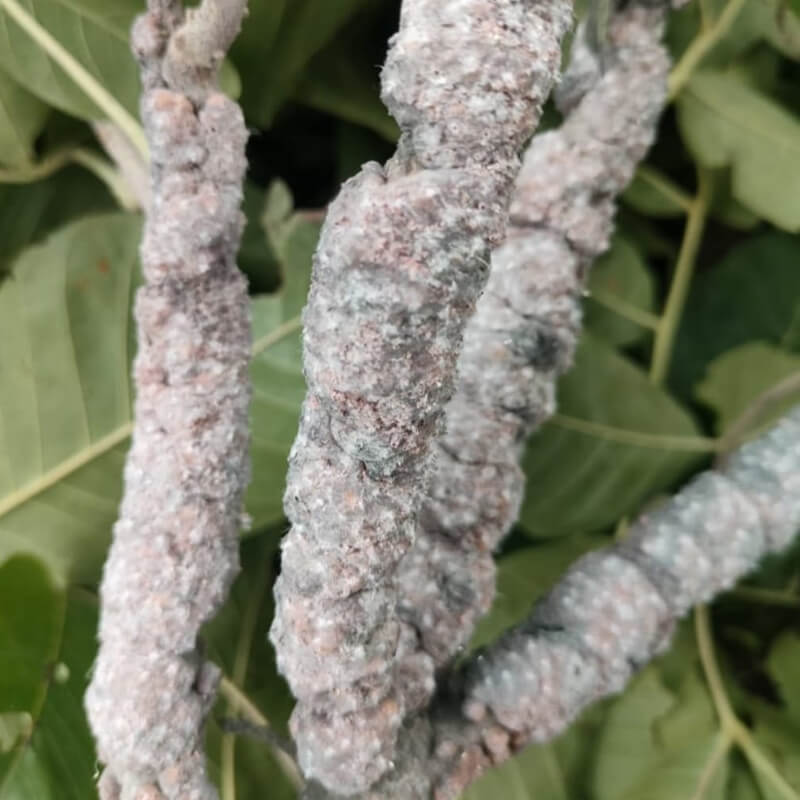
Stick Lac
Description: Stick Lac is the raw, natural resin secreted by the lac insect (Kerria lacca) as it feeds on the sap of host trees such as Palash, Ber, and Kusum. As the insects mature, they secrete a resinous substance that hardens and forms a coating on the branches and twigs of these trees. Once fully matured, these resin-coated twigs are harvested by farmers and are known as Stick Lac. This is the earliest and most natural form of lac, and it serves as the base material for further processing into products like Seed Lac, Shellac, Button Lac, and Aleuritic Acid. The process of producing stick lac involves several traditional and scientific steps. First, host trees are pruned and inoculated with broodlac, which contains live lac insects. Over a few months, the insects secrete resin, which solidifies on the branches. The encrusted twigs are then scraped off, sun-dried, and cleaned to produce stick lac. Though it is not yet purified, stick lac is highly valuable in the lac industry and is widely used for refining into lac derivatives. It is also utilized directly in natural dyeing, traditional wood polishing, eco-friendly adhesives, and crafts. Stick Lac plays a vital role in rural economies, especially among tribal farmers, and is the starting point of Indias vibrant and sustainable lac value chain.